
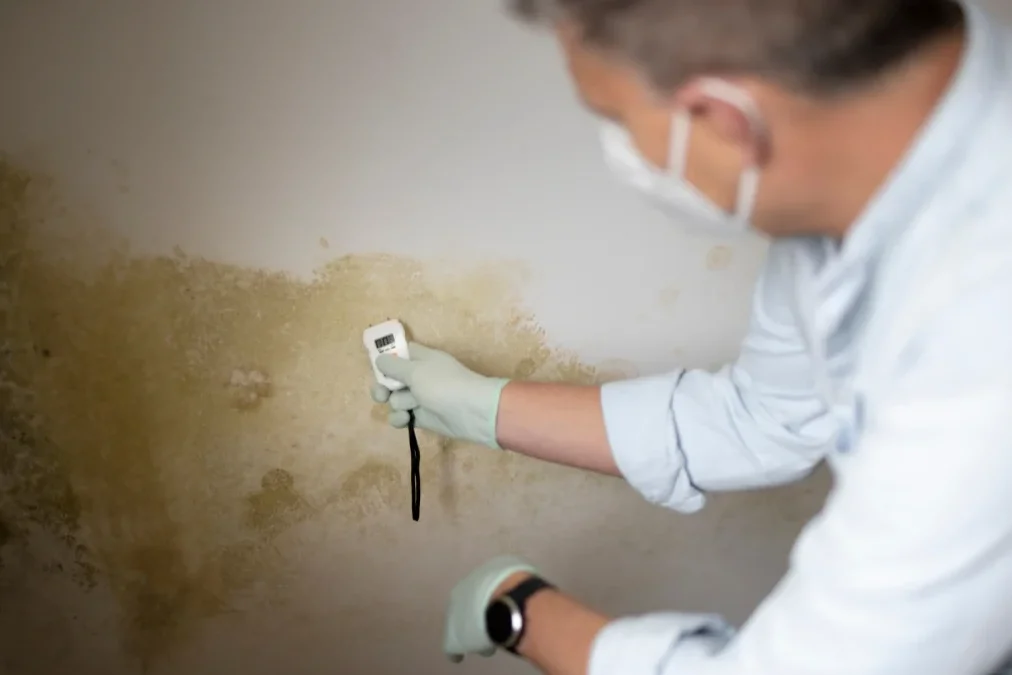
The first phase of Awaab’s Law has today (27/10) come into effect, meaning all social landlords must address emergency damp and mould cases with 24 hours of being reported.
Significant damp and mould cases must now be investigated within 10 working days of being reported, and make the properties in question safe within five working days. For both significant and emergency cases, the findings of the inspection must be provided to the tenants within three working days.
Registered providers will also be required to consider the circumstances that could put them at risk, such as those with health conditions or young children, and provide alternative accommodation if the homes cannot be made safe within the new timeframes.
Failing to comply with Awaab’s Law could result in being found in breach of the Social Housing (Regulation) Act 2023, and RPs could be ordered to carry out the repairs or pay compensation to the residents affected.
Housing secretary, Steve Reed, said: “Everyone deserves a safe and decent home to live in and Awaab Ishak is a powerful reminder of how this can sadly be a matter of life or death.”
“Awaab’s family has fought hard for change and their work to protect millions of tenants’ lives will live on as a legacy to their son. Our changes will give tenants a stronger voice and force landlords to act urgently when lives are at risk, ensuring such tragedies are never repeated.”
Phase two of Awaab’s Law will come into effect in October 2026, where additional hazards will be required to be addressed by RPs where they could result in a significant risk of harm.
These include:
- Fire and electrical hazards
- Structural collapse and explosions
- Excess cold and heat
- Domestic and personal hygiene and food safety
- Falls associated with baths etc. on level surfaces, on stairs and between levels
Phase three will follow in October 2027 and will cover any remaining housing, health and safety rating system hazards, not including overcrowding, where they present a significant risk to residents. In total, there are 29 hazards, such as radiation, lead, asbestos and noise.
The new legislation came into effect following the death of toddler, Awaab Ishak, following prolonged exposure to damp and mould in December 2020 in a Rochdale Boroughwide Housing home.
The Regulator of Social Housing said that landlords’ compliance with the new legislation will be considered when it hands out regulatory gradings.
Sián Hemming-Metcalfe, operations director at Inventory Base, commented: “Awaab’s Law is more than another regulation to manage – it represents a long-overdue shift in how we view housing safety and standards across the UK. It forces us to confront what too many have ignored for too long: people – children – have died because action wasn’t taken soon enough. The law demands a response from everyone responsible for housing, not only the social landlords it applies to from today.”
“For years, we’ve had the data, the inspection tools, and the legal framework. What’s been missing is consistency and accountability. Regular, evidence-based inspections should already be standard practice – not something triggered by tragedy or the threat of enforcement.”
“This shift isn’t about compliance alone; it’s about doing the job properly. Every damp wall or blocked vent is a warning sign, not a maintenance note to file away. With the Renters’ Rights Act firmly on the horizon, we’re out of excuses. The systems and standards exist – now we need the will to apply them.”
Source: Showhouse